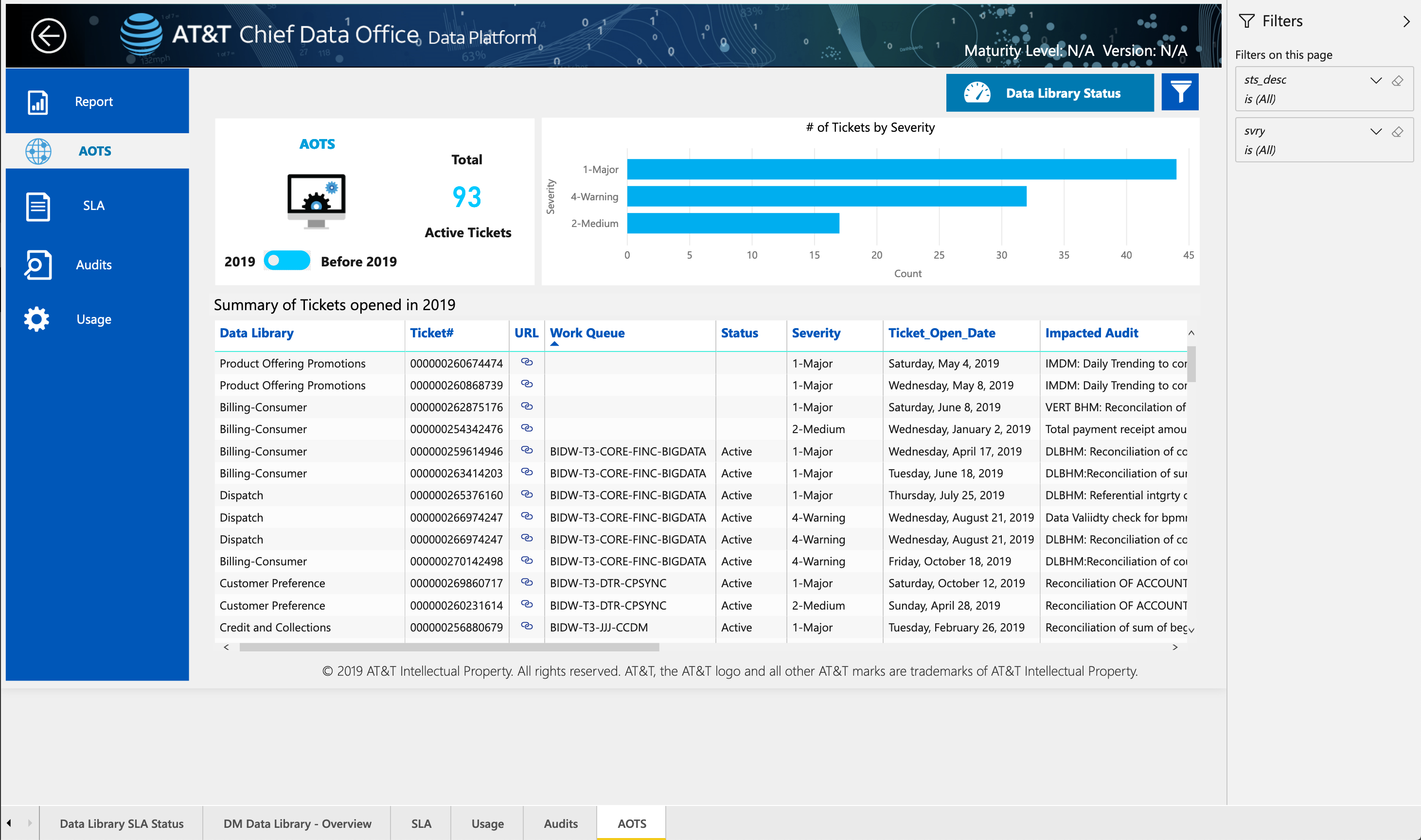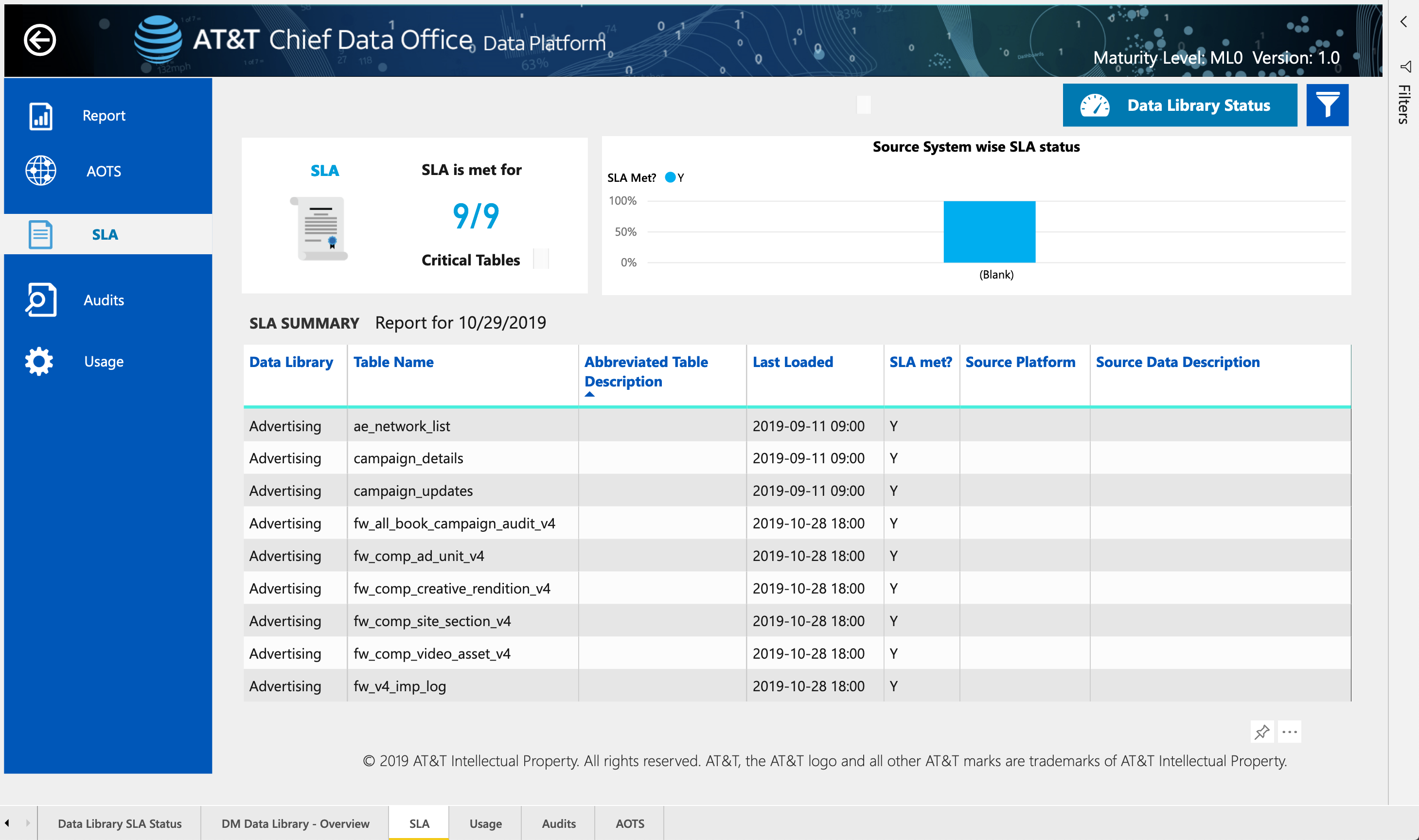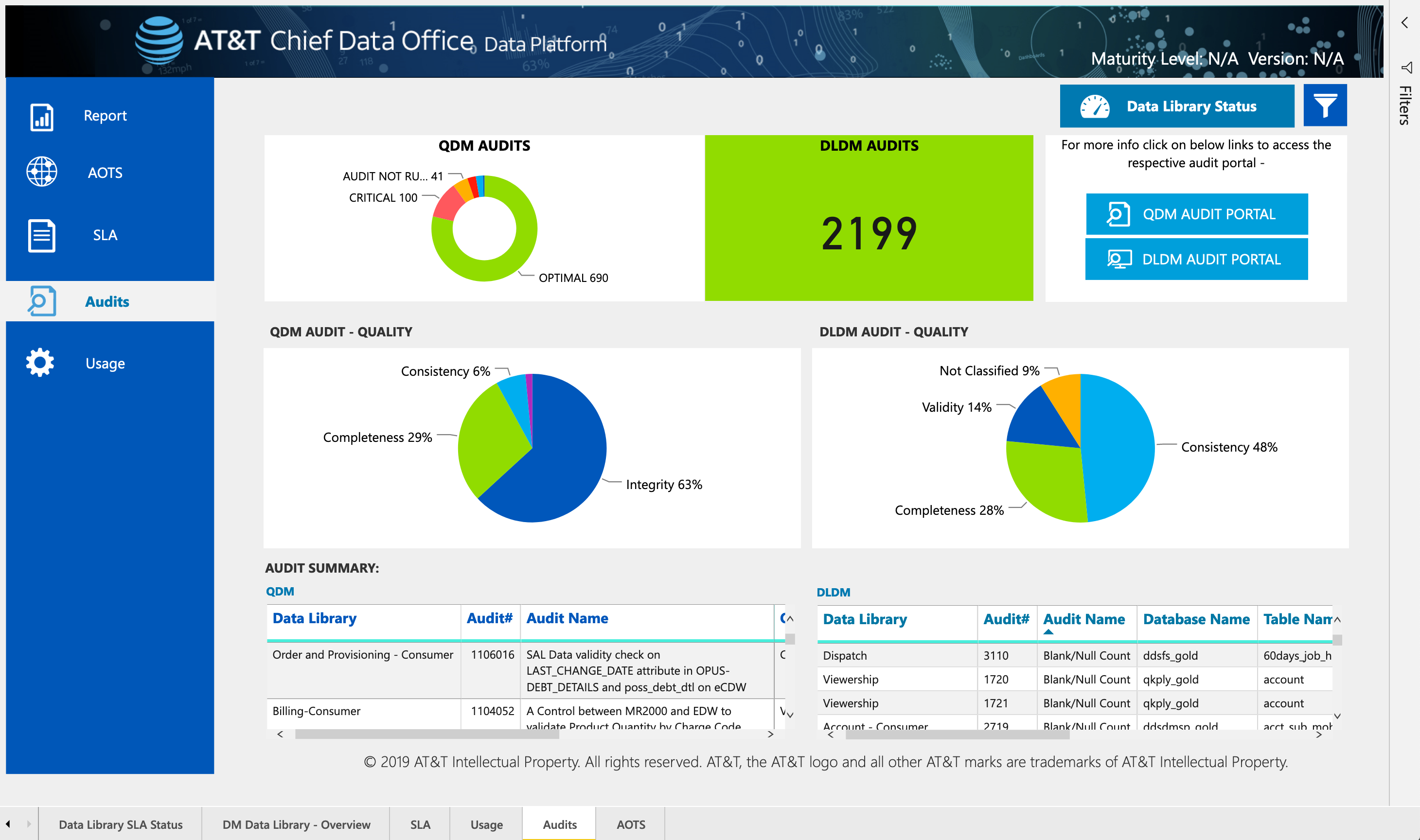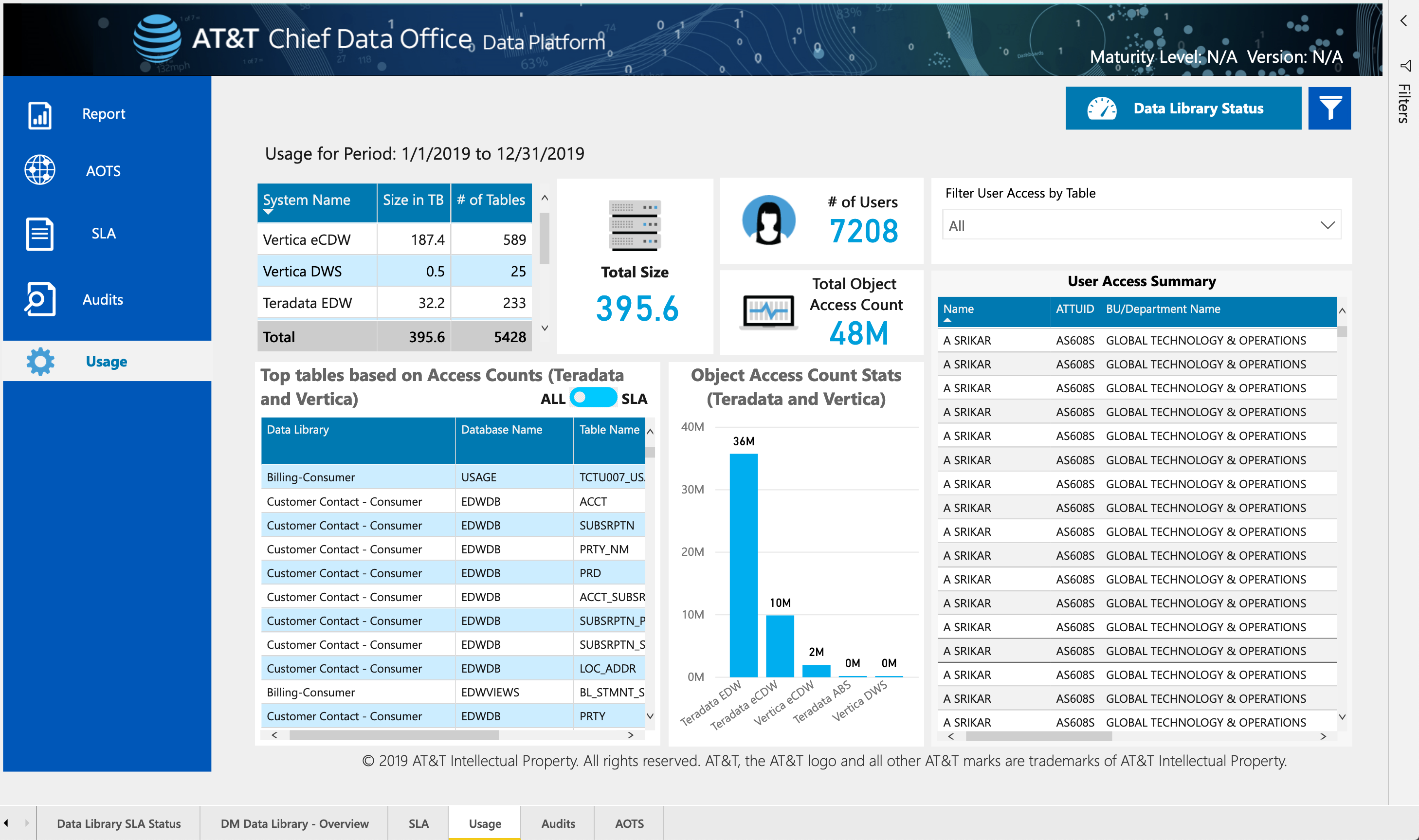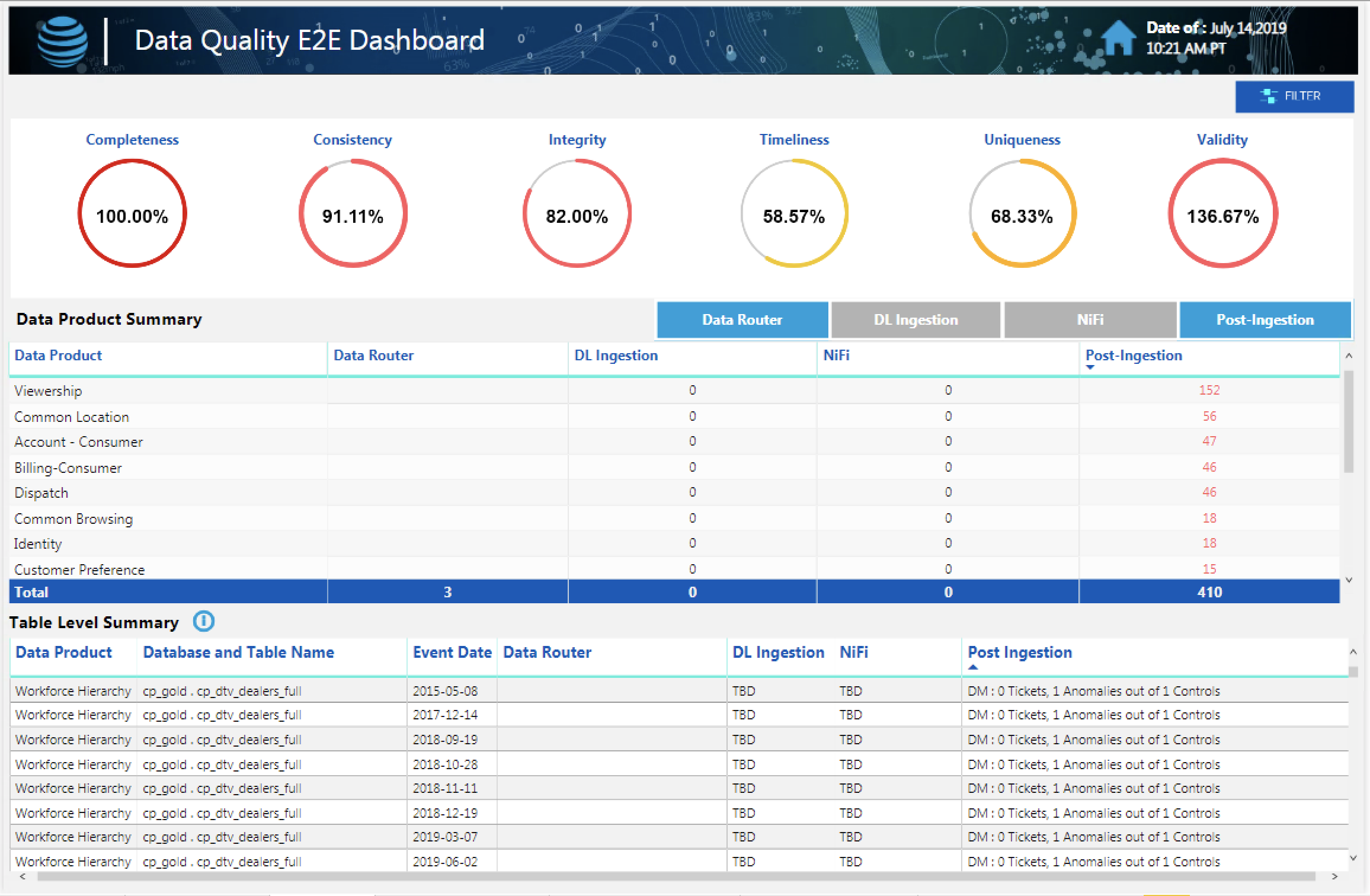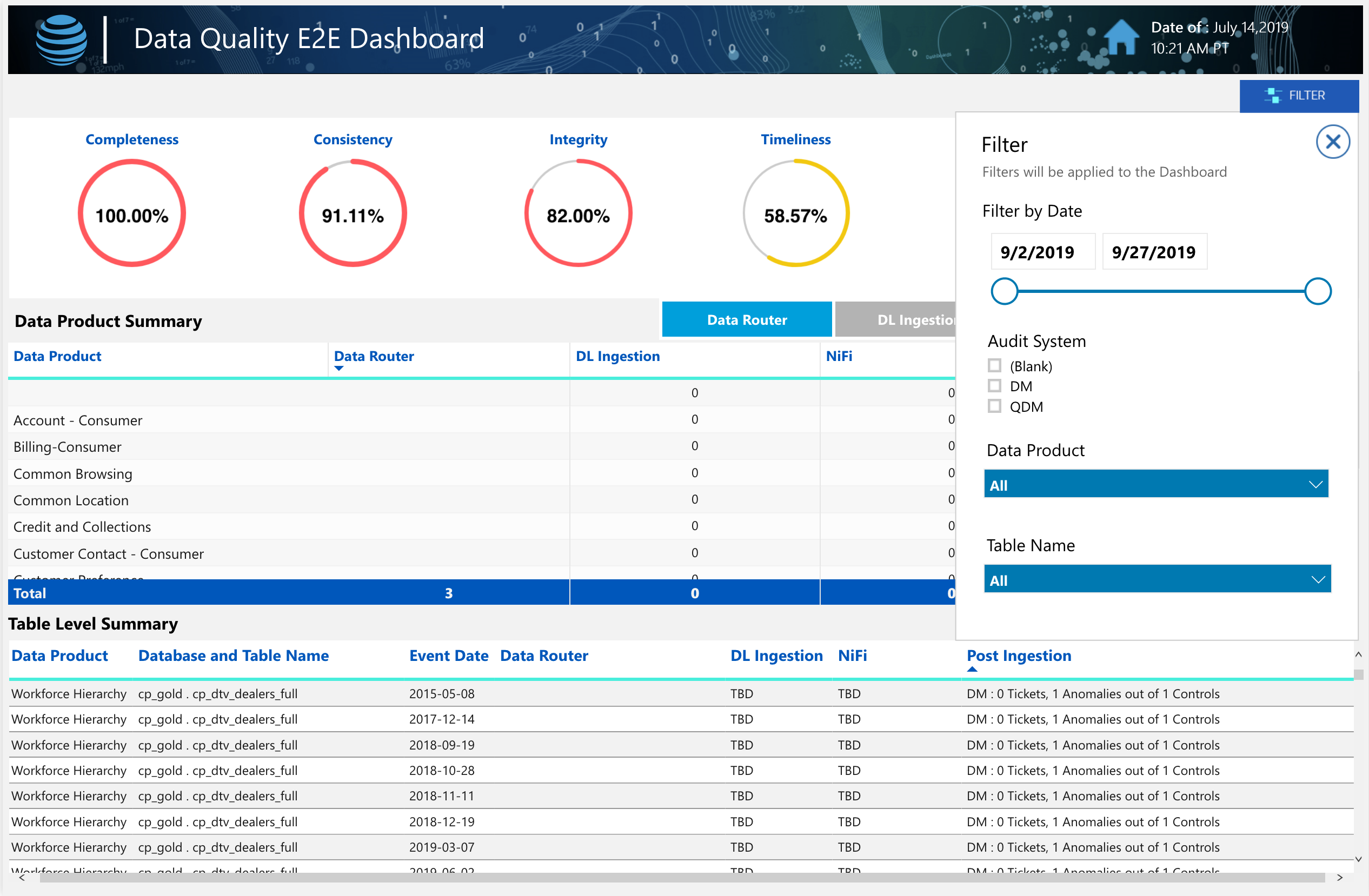
End to End — AT&T's Data Quality Dashboard Redesign
Executive Outcome: Established a repeatable enterprise data-quality operating model that improved decision confidence, reduced operational risk, increased accountability, and created a trustworthy foundation for analytics and future AI-assisted workflows.
Scope: End-to-end data lifecycle (ingest → transform → publish → monitor), shared definitions, quality gates, and cross-team governance.
Role: Design + Product Ops leadership — defined the Data Quality Contract (definitions + SLAs), implemented governance reviews, and aligned stakeholders on quality gates and ownership.
Leadership Footprint:
- Cross-org alignment: Unified stakeholders under shared data definitions and accountability (ownership + escalation paths).
- Hard decisions: Introduced quality gates and stop-ship criteria when data trust was at risk.
- Tradeoffs: Balanced speed vs. correctness by automating checks where possible and escalating only high-risk exceptions.
- Created a repeatable DQ operating model with clear ownership, quality thresholds, and monitoring.
- Reduced rework by catching issues earlier with quality gates and exception workflows.
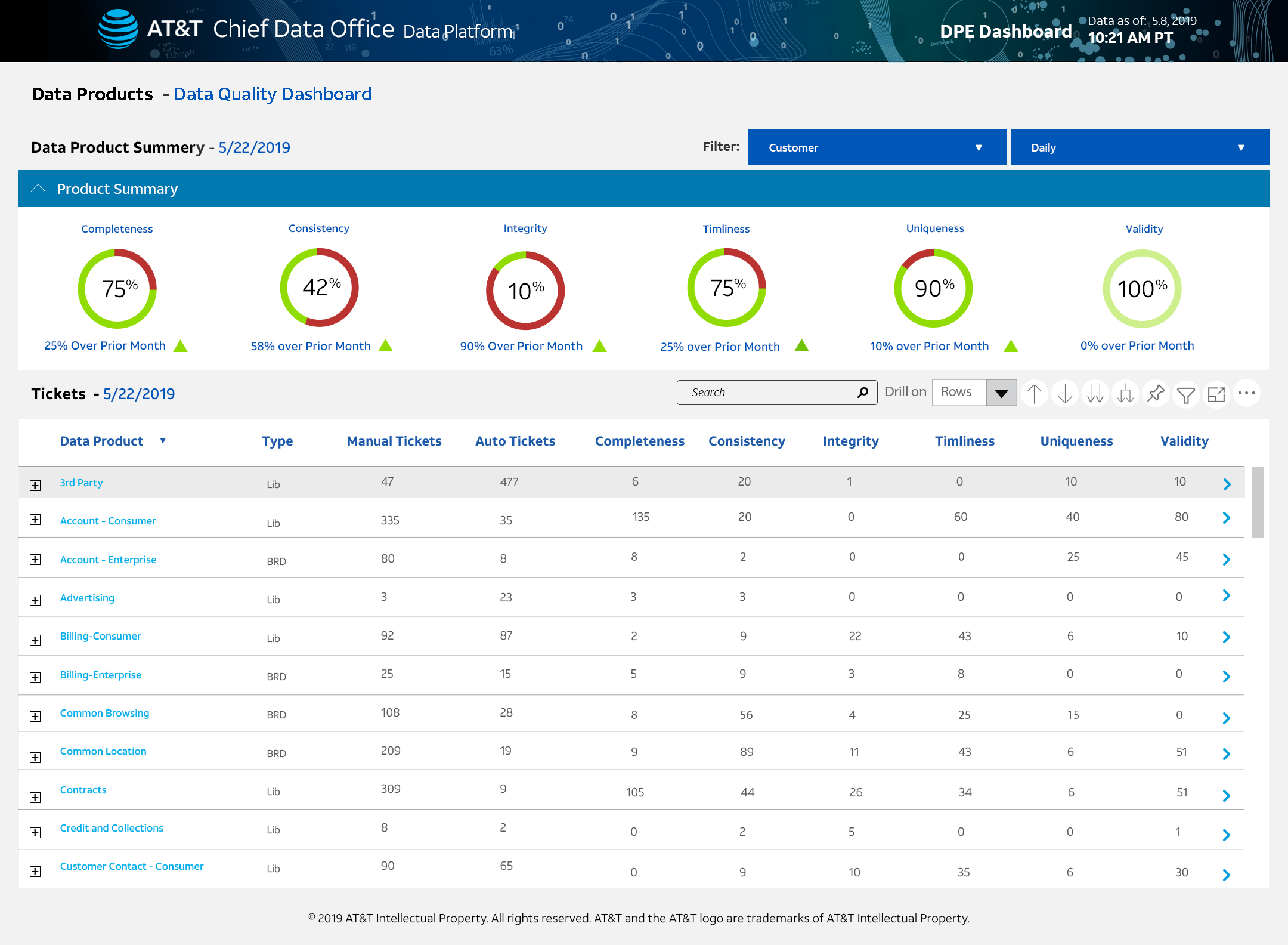
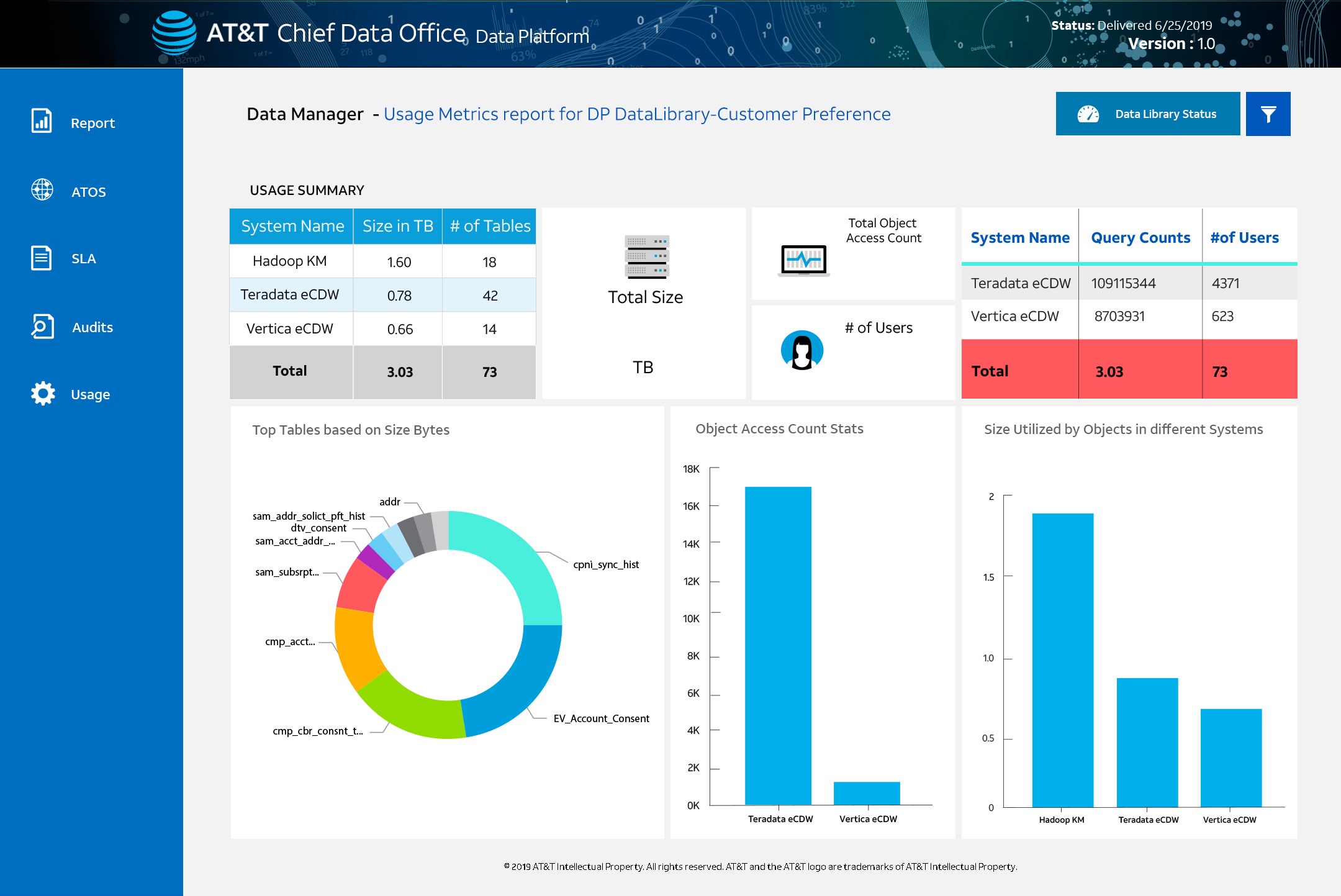
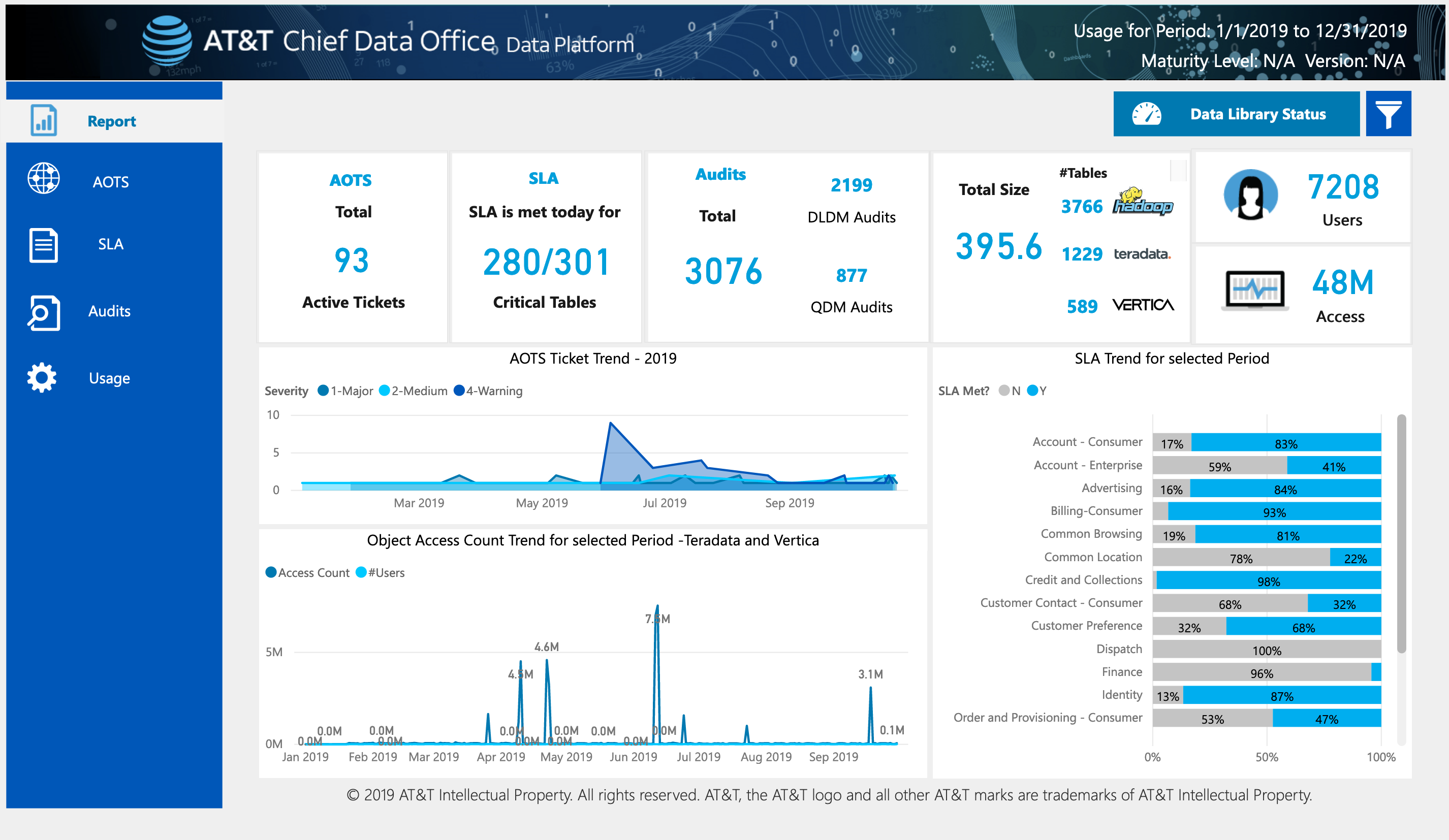
- Improved decision confidence by making lineage, definitions, and quality status visible at decision time.
- Embedded into enterprise workflows: quality gates + exception paths make trust visible at decision time, not after the fact.
- Reusable patterns & constraints: standardized contracts (definitions + SLAs) and governance reviews create scalable primitives other teams can adopt.
- Governance-by-design: lineage + evidence tie UX steps to audit-ready artifacts, supporting transparency and accountability expectations.
- Enterprise governance primitives: designed for audit trails, access boundaries, and policy constraints to be enforced consistently across teams.
- Human control: “stop-ship” criteria and escalation paths ensure high-risk decisions require review, not silent automation.
- Cross-org influence: aligned stakeholders on ownership and operating model—exactly how cross-product AI UX patterns scale.
This framing aligns to stated AI UX mandate:reusable experience frameworks, trust, clarity, and governance principles for enterprise-grade decision systems.